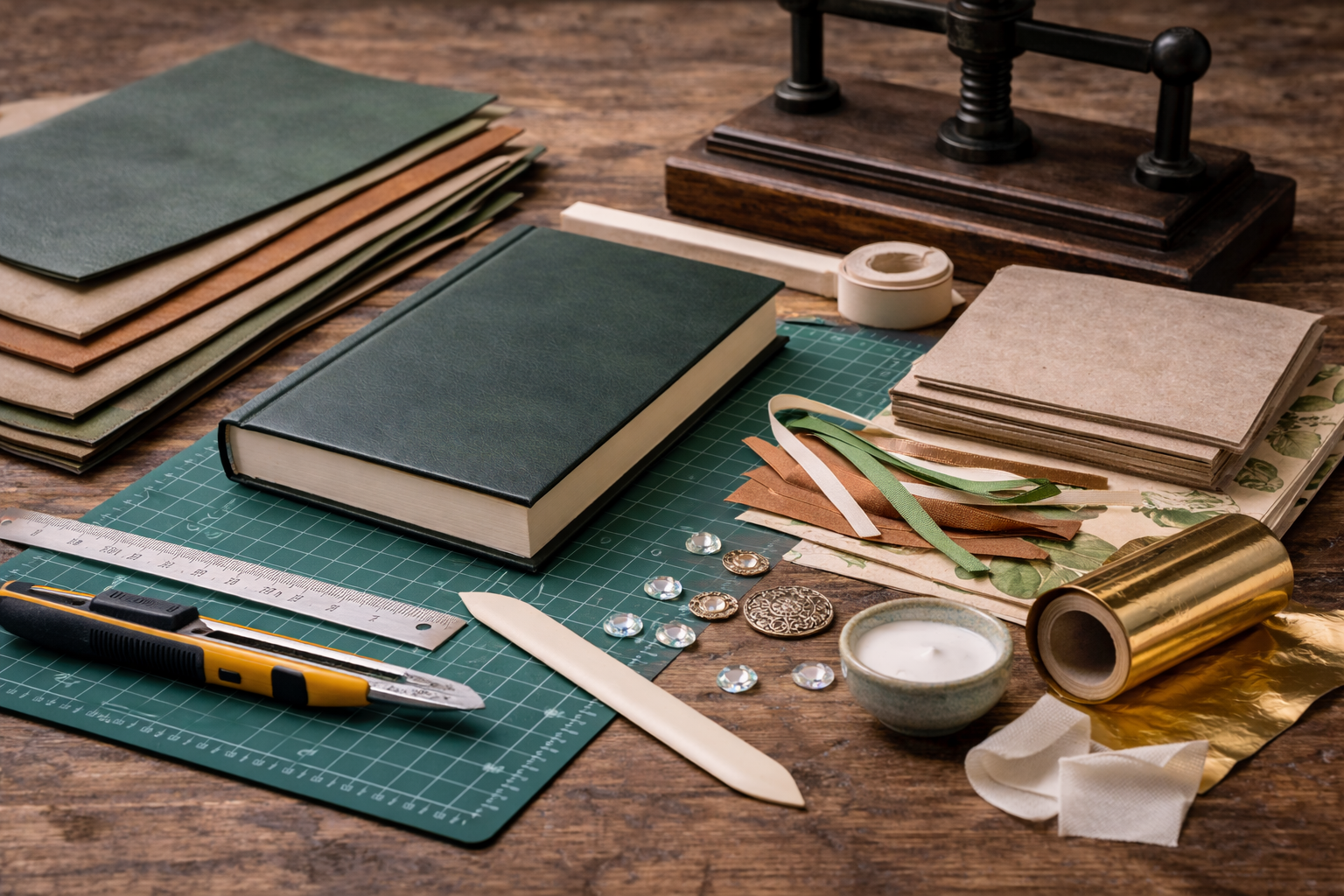
Rebinding well-loved books and transforming them into handcrafted works of art.
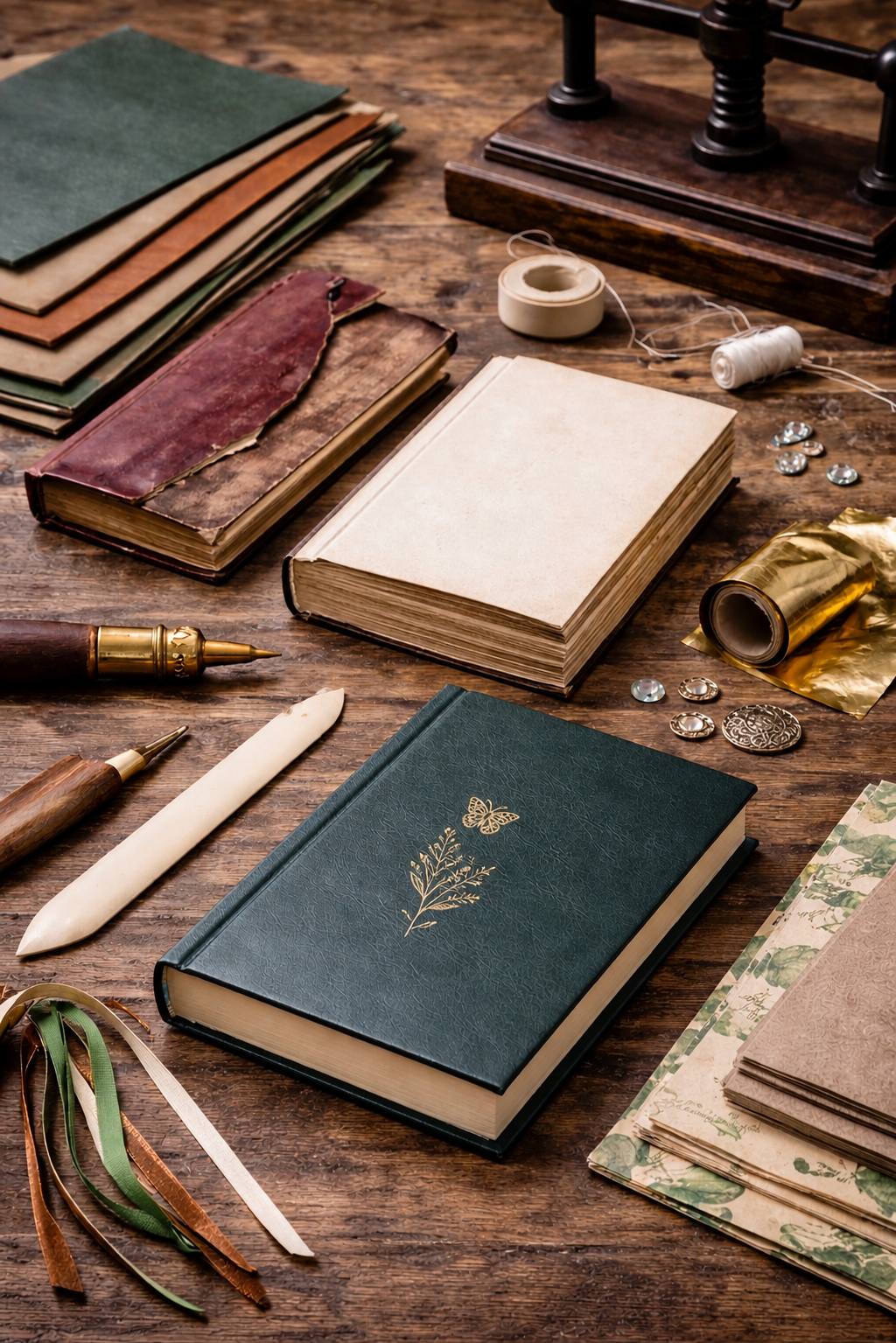
Book Rebinding
Book rebinding is the process of carefully removing a book’s original cover and spine and replacing them with a newly crafted binding. The work often includes cleaning and preparing the text block, strengthening the spine, adding new endpapers, and creating a custom cover designed to protect the book and extend its life.
The First Sale Doctrine allows a legally purchased book to be modified and resold. Guided by this principle, I select published books, carefully rebind them, and present the finished volumes as handcrafted works.
The original text of the book remains unchanged. Only the binding and cover are transformed, allowing each volume to be preserved while being reimagined through my own artistic vision.
Book cover designs are created entirely by hand using a hot foil pen and traditional embossing tools. This hands-on approach allows each piece to develop slowly and intentionally, without the use of automated or digital design machines.
Vegan Leather
Vegan leather refers to materials designed to replicate the look and durability of traditional leather without using animal hides. These materials may be created from synthetic sources such as polyurethane (PU) or from newer plant-based alternatives developed from natural fibers and agricultural byproducts.
In recent years, innovative plant leathers have been developed from materials such as pineapple leaves, cactus, apple waste, and mycelium (mushroom fibers). These emerging materials provide cruelty-free options that allow artisans to create beautiful and durable work while avoiding the use of animal products.
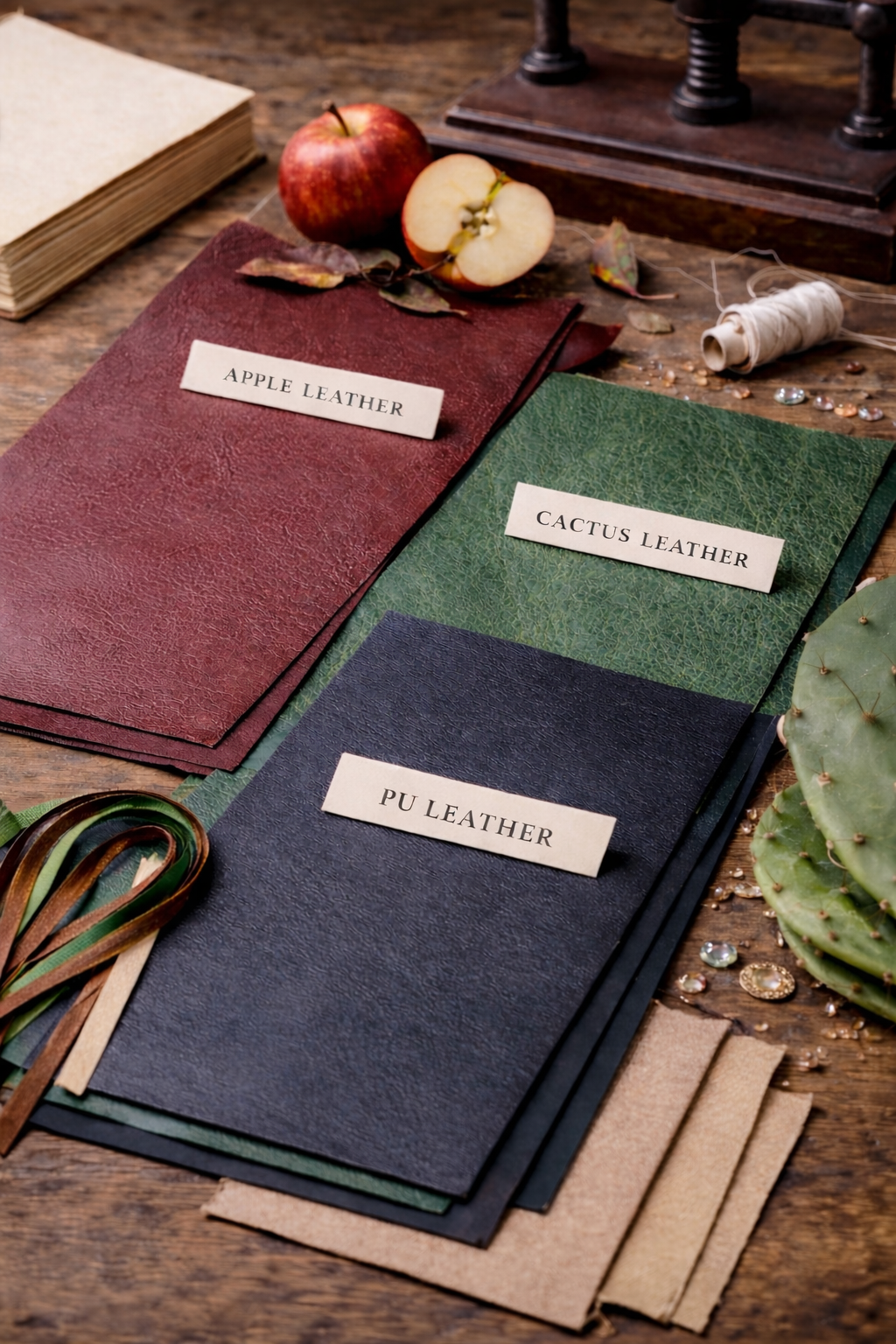
In my own bindings, I currently work with apple leather, cactus leather, and polyurethane-based vegan leather. As new materials continue to develop, I plan to expand the range of vegan leathers used in my work. More information about these materials can be found in the sections below.
Using vegan leather allows me to craft bindings that are both strong and elegant while remaining true to my commitment to materials that respect animals and the natural world.
Types of Vegan Leather Used
PU (polyurethane) Synthetic Leather
Polyurethane (PU) leather is often considered a more environmentally mindful alternative to PVC-based synthetic leather. It is typically produced using water-based processes, tends to be lighter in weight, and is generally more breathable.
PVC leather, while often less expensive and highly resistant to water and wear, involves more toxic chemicals during manufacturing and disposal. Its production commonly requires plastic softeners such as phthalates, which raise environmental and health concerns.
Both PU and PVC are synthetic, plastic-based materials and are not biodegradable, though they provide animal-free alternatives to traditional leather. In my work, I choose PU leather rather than PVC, allowing me to maintain an animal-free approach while avoiding the harsher environmental impacts often associated with PVC.
Cactus Vegan Leather (Desserto)
Cactus vegan leather represents one of the most premium plant-based options available today. While typically more expensive than polyurethane (PU) vegan leather, it is valued for its durability, softness, breathability, and its resemblance to traditional leather.
In my work, I use cactus leather produced by Desserto, which is made entirely from plant-based sources. Instead of blending cactus fibers with conventional PU materials, Desserto has developed its own bio-polymer created from organic, renewable compounds.
This material is made from the mature leaves of the nopal cactus, commonly known as the prickly pear. The leaves are harvested and processed into a flexible material that can be used as an alternative to animal leather. Because it is derived from plants rather than animal hides, cactus leather offers a cruelty-free option for creating durable and attractive bindings.
Sidra Apple Vegan Leather
Apple leather is a premium vegan material that is more expensive than polyurethane (PU) leather, reflecting the innovative plant-based processes used in its production.
Apple vegan leather is a plant-based material made in part from recycled waste produced by the apple juice industry. This material uses apple pomace—such as peels, pulp, and cores—that would otherwise be discarded. The apple byproducts are dried, processed, and combined with binding materials to create a flexible and durable alternative to traditional leather.
In my work, I use Sidra apple leather, which incorporates a significant portion of organic apple waste while maintaining the strength needed for bookbinding. The result is a lightweight, breathable, and vegan material that allows beautiful bindings to be created while also helping to reduce agricultural waste.